
GSPRE Symposium 2026
The Graduate School of Precision Engineering (GSPRE) at the University of Bern is pleased to announce its Second Symposium, taking place on Friday, June 26, 2026, from 14:00 to 18:00 at the ExWi Building, University of Bern. Held under the theme “Engineering Accuracy Across Scales,” the symposium will bring together researchers, industry partners, and students to explore current advances and future directions in precision engineering within a collaborative and interdisciplinary setting. We look forward to welcoming you!
Information
| Organized by | University of Bern, Graduate School of Precision Engineering |
|---|---|
| Date | Friday, June 26, 2026 |
| Time | 14-18 |
| Location | ExWi Building, Room 099 University of Bern Sidlerstrasse 5 3012 Bern |
| Registration | Registration is CLOSED. For further information or late registration, contact susanne.heinzer@unibe.ch |
| Characteristics | open to registered participants, free of charge |
Directions
By public transport:
From Bern railway station, walk along the platform to the underpass in the direction 'Universität Länggasse'. At the end of the underpass you see three elevators. Take one to the top floor. Turning right around the elevator-building, you are facing the main University building, on the right side there is a modern building with various astronomical instruments on the roof. This is the building 'Exakte Wissenschaften'
By car:
Exit 'Bern Neufeld': Drive in direction 'Zentrum' on 'Neubrückstrasse' until you reach a roundabout. Take the first exit off this roundabout into 'Mittelstrasse'. After three blocks turn left into 'Gesellschaftsstrasse'. The building straight ahead is the 'Exakte Wissenschaften'. There is limited parking available in the blue parking zones around the building. Alternatively, you may use the railway station parking garage (approximately CHF 4.50 per hour) or, for a more economical option, the Park + Ride Neufeld, which is located directly at the "Bern Neufeld" motorway exit. From the Park + Ride Neufeld, it is about a 20-minute walk to the ExWi building.
Registration
Registration is CLOSED. For further information or late registration, contact susanne.heinzer@unibe.ch
Program
14:00 – 14:10 Welcome & introduction by Prof. Dr. Jürgen Burger
14:10 – 14:40 Keynote by Prof. Dr. Audrey Vorburger, Space Research & Planetary Sciences, UniBE
14:40 – 15:10 Industry talk by Dr. Daniel Rosenfeld, Melexis, a global supplier of micro-electronic semiconductor solutions
15:10 – 15:20 Poster pitches by PhD students
15:20 – 16:00 Coffee break, poster session & competition
16:00 – 16:30 Industry talk II by Dr. Nicholas Randall, Alemnis Nanoindentation
16:30 – 16:50 Award ceremony & welcome of new doctoral candidates
from 16:50 Apéro & networking
Speakers
Welcome and Opening Remarks

Prof. Dr. Jürgen Burger
Prof. Dr. Jürgen Burger holds a PhD in Physics from the University of Erlangen. After positions at CSEM, Roche, and Johnson & Johnson, he was appointed titular professor at the University of Bern in 2014. He leads the Graduate School and the Master's program in Precision Engineering and focuses his research on smart implants and translational systems at the interface of medical and precision engineering.
Precision Engineering Across Scales: Large Scale

Prof. Dr. Audrey Vorburger
Prof. Dr. Audrey Vorburger is an assistant professor of planetary science at the University of Bern. She holds a PhD in Physics from the University of Bern and previously studied electrical engineering at ETH Zurich. Her research focuses on planetary atmospheres, icy moons, and the search for life beyond Earth, combining numerical simulations with space instrumentation such as mass spectrometers. She is involved in several international space missions, including ESA’s JUICE mission, where she serves as lead scientist for a mass spectrometer instrument.
Talk overview
Engineering for Extremes: Designing a Mass Spectrometer System for NASA's Uranus Orbiter and Probe flagship mission
The Uranus Orbiter and Probe mission has been identified as NASA’s next flagship mission, aiming to investigate the origin, structure, and atmospheric composition of an ice giant. A key element of the mission is an atmospheric probe equipped with a mass spectrometer system capable of measuring trace species and isotope ratios under extreme conditions.
This keynote presents the engineering approach behind the Uranus Probe Mass Spectrometer System (UP-MSS), focusing on how scientific objectives and mission constraints drive system design. Starting from the science requirements—such as measuring trace gases at mixing ratios down to 10⁻¹⁰ and operating across pressures from 10⁻⁷ mbar to 20 bar—we show how these translate into demanding system-level requirements.
The talk highlights the resulting architecture, including the integration of a time-of-flight mass spectrometer with dedicated subsystems for gas handling, separation and enrichment, and in-flight calibration. Special emphasis is placed on enabling technologies that bridge the gap between scientific ambition and instrument capability.
Finally, we discuss selected precision engineering challenges, including ion optics design, gas flow control, and ultra-low-leakage valve systems, illustrating how large-scale engineering solutions emerge from tightly coupled science and system constraints.
Precision Engineering Across Scales: Medium Scale

Dr. Daniel Rosenfeld, Melexis
Dr. Daniel Rosenfeld holds a PhD in semiconductor physics from EPFL. He is Open Innovation Manager at Melexis, where he develops strategic collaborations with universities and industry partners and drives innovation initiatives in sensor technologies, including applications in electric vehicles and battery systems. He brings extensive experience in microelectronics, magnetic sensors, and the industrialisation of integrated circuits, bridging research and large-scale production across multiple high-tech sectors.
Talk overview
From Technology Push to Value Precision: Open Innovation as a Discipline for Engineering Relevance
At Melexis, we develop high-precision semiconductor sensors for large-scale applications, primary market being the automotive. This requires mastering the full engineering chain, from micro-scale physics and IC design to system-level integration and high-volume manufacturing under strict constraints of accuracy, cost, and reliability.
Yet in mass markets, competition is intense, and as a component supplier we represent only a small part of a complex product, with an entire value chain between us and the end user. Identifying where value truly resides is therefore inherently challenging, making the exploration phase critical. Innovation becomes a necessity, driving us to develop new classes of sensors, such as tactile sensors and robot fingertips for humanoid robots.
These experiences highlight a fundamental shift: technical feasibility does not guarantee relevance. Open innovation becomes essential — not merely as collaboration, but as a engineered discipline to explore ecosystems, engage stakeholders or partners, and uncover unmet needs across the value chain. Combined with a structured framework, it enables the validation of desirability and adoption alongside technical maturity.
This talk argues that innovation requires a new form of precision: the precision of value creation — ensuring that what we build is not only technically sound, but truly relevant.
Precision Engineering Across Scales: Small Scale
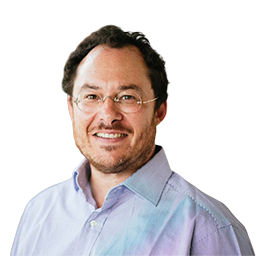
Dr. Nicholas Randall, Alemnis
Nicholas Randall is Vice President Business Development at Alemnis AG in Thun, Switzerland. He has extensive experience in nanoindentation and in situ mechanical testing, with a strong focus on industrial applications. In addition to his role in industry, he is actively involved in education and knowledge transfer, lecturing on nanoindentation and tribology at institutions including EPFL, MIT, and the FSRM Swiss Foundation for Research in Microtechnology. He holds a PhD in nanotribology/nanoindentation from the University of Neuchâtel.
Talk overview
Recent innovations in small-scale testing for industrial materials engineering
Modern industrial materials are increasingly engineered at the micro- and nanoscale. This is especially true in sectors such as semiconductor manufacturing, advanced coatings, metals processing, microelectronics, energy, and precision engineering. In these applications, very small defects, interfaces, grains, or thin layers can strongly influence product performance, reliability, and lifetime. Understanding how these small-scale features deform, crack, or fail is therefore essential for improving materials, processes, and devices.
This talk will present recent advances in in situ micro- and nanomechanical testing inside a scanning electron microscope (SEM), with a focus on practical industrial applications. These methods allow controlled mechanical testing of very small material volumes while observing deformation and failure in real time. For semiconductor failure analysis, this can help investigate cracking, delamination, brittle fracture, and the mechanical integrity of thin films, interconnects, and layered device structures. For coatings and surface engineering, it enables direct measurement of adhesion, hardness, fracture resistance, and wear-related deformation in individual layers or interfaces. In metals processing, it provides insight into how grain structure, crystal orientation, heat treatment, and forming history affect local strength and plasticity.
A key theme of the talk will be the extension of nanoindentation beyond conventional room-temperature and slow-rate testing. New developments now allow materials to be tested over a wide temperature range, from cryogenic conditions to temperatures exceeding 1000 °C, and at very high deformation rates. This is important for industrial applications where materials experience thermal cycling, rapid loading, impact, manufacturing stresses, or harsh service environments. Additional instrument innovations allow the measurement of rate-dependent hardness at constant indentation strain rates up to 10⁵ s⁻¹. This opens the door to studying deformation conditions that are highly relevant to high-speed manufacturing, machining, forming, impact events, and reliability testing, but which have previously been difficult to access at small scales.
By combining precise mechanical data with real-time SEM imaging and post-test microstructural analysis, these techniques provide a direct link between small-scale mechanisms and industrial performance. The result is a more practical understanding of why materials and components fail, how processing routes influence mechanical behavior, and how next-generation materials can be designed for improved reliability under demanding conditions.